Workouts / 11 min read/ 3 February 2024
The Most Effective Glute Exercises for Strength and Size
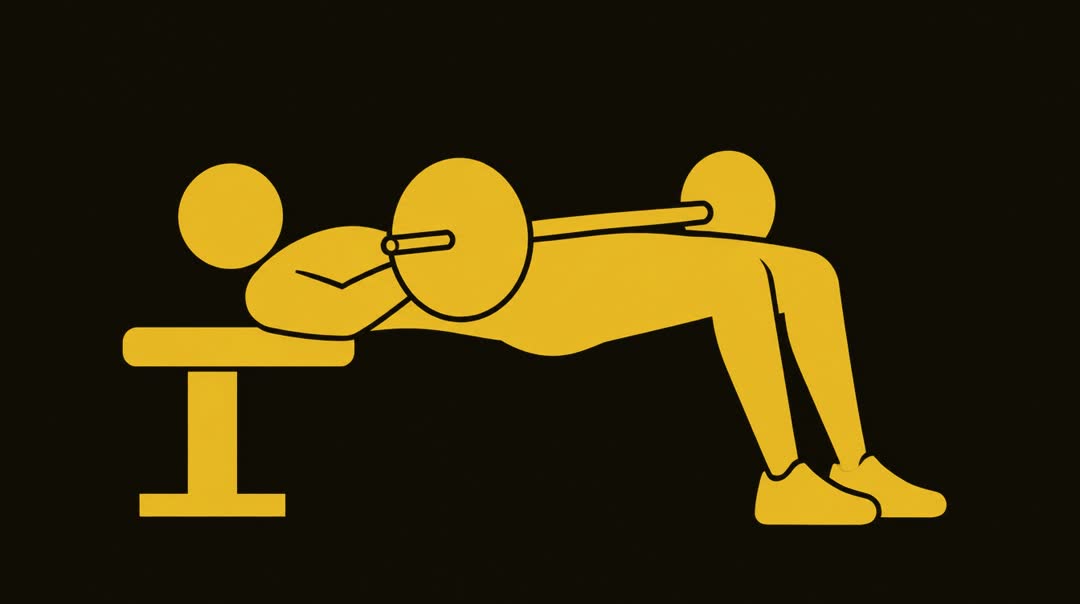
Getting yourself a set of well-defined and powerful Gluts goes way beyond acquiring a graceful backside that turns heads. Gluts allow you to execute basic movements by acting as key stabilizers of your Pelvis and driving key movements like Hip joint extension and abduction.
Beyond handling everyday movements efficiently, strong Gluts translate to better performance on the gym floor by allowing you to handle key lifts like Squats and Deadlifts with proper form and efficiency. Building strong Gluts requires consistent focus on exercises which optimize recruitment of this muscle groups. This article will explore the most effective Glut exercises based on current scientific evidence. We’ll set the foundation with a look at how these muscles are set up before plunging into the actual exercises in light of available evidence.
Basic Glut Anatomy
Gluts are a triad of pelvic muscles connecting your Pelvis to the thigh bone (Femur). Let’s get through a quick breakdown of each muscle:
Gluteus Maximus (Butt Muscle)
This is the largest and most superficial Glut muscle located on the back of your Pelvis. Its fibers originate from the upper surface of the Pelvic Bone and tailbone before running downwards across the butt at a 45-degree angle to insert onto the upper part of the Thighbone. Its main function is to extend the Hip Joint, which is key in getting into and maintaining an erect standing posture.
Gluteus Medius
This is a smaller muscle, with most of its fibers underneath the Glut Max. Its fibers start from a portion on the upper part of the Pelvic Bone (aka Gluteal Surface), before running downwards at an angle to insert on the upper part of the Femur. When active, the muscle pulls the thighbone outwards (Abduction) and helps with stabilizing the Pelvis in a neutral position.
Gluteus Minimus
As the name suggests, this is the smallest Glut muscle. Its fibers also originate from the upper surfaces of the Pelvic Bone. It also runs downwards and insert on the same spot as the Glut Medius on the Femur. Just like its bigger brother (G.Mediu), the Glut Minimus is involved in Abduction and helps with stabilizing the Pelvis in space.
Now let’s move on to some of the most effective Glut exercises on the planet.
The Step Up
The Step Up is probably the most underrated Glut exercise. Despite being not-so-popular, recent evidence from comparative research studies suggests it should be on top of any list. A 2020 research review, published in the Journal of Sports Science and Medicine, came out with some interesting insights. The researchers delved into 1963 studies done over the past decade to compare Gluteus Maximus activation during 16 popular Glut exercises. These included popular moves like Hip Thrusts, Deadlifts and Lunges. In the end, the Step Up proved to be the most effective as it recorded highest Glut muscle excitation levels.
How to Do the Step Up
Getting Set
- Stand tall beside a sturdy, elevated platform. You can use a bench or a box.
- Place your right foot on the platform so that your Knee is bent at about 90 degrees.
- Slightly lean forward to shift your bodyweight to the lead foot.
The Movement
- Drive through your lead leg and extend the Knee to raise your body and stand up on the platform.
- Once the weight-bearing leg is fully extended, you can place the trailing foot onto the platform, or simply keep it behind while balancing on one leg.
- With control, reverse the motion to the starting position.
Note
- Box Height: The rule of thumb is to choose something that allows your lead Knee to bend at 90 degrees. However, consider a lower height if you have preexisting Knee joint problems or if you’re simply unable to balance effectively to complete a proper rep.
- Do not cheat by pushing off the ground with your trailing foot.
- Don’t just let go and drop off the bench during the descending phase of the movement. This is the concentric phase where the Glut muscle is actively lengthening to control the movement. Take advantage of this by ensuring a controlled, smooth descent back to the starting position.
Barbell Hip Thrust
The Hip Thrust is an exceptional Glut isolation exercise, with plenty of research evidence to prove its worth. The study quoted above identified it as a one of the most efficient exercises after the Step Up, which agrees with a good number of studies comparing it with other top Glut workouts like the Deadlift and Squat. For instance, a 2021 study, published in the Journal of Strength and Conditioning Research, labeled it the most potent Glut Max activator ahead of the traditional Barbell Back Squat and Split Squat. An earlier study (2018) compared it to the classic Deadlift and Hex Bar Deadlift in terms of Glut Max activation. In the end, the Hip Thrust proved to be a better Glut activator than the Hex Bar Deadlift while demonstrating equal activation levels to the traditional Deadlift.
How to do the Hip Thrust
The Setup
- You’ll need a loaded Barbell and a standard bench to perform the exercise.
- Sit down on the floor with your Shoulders resting on the side of the bench.
- Hold the Barbell across your upper thighs, just below the waistline.
- Knees should be bent, with both feet flat on the floor.
The Movement
- Drive the weight upwards by extending both Hips. At the top position, your thighs, Pelvis and back should be aligned while the Knees maintain a 90-degree bend.
- With control, return to the starting position, and repeat for another rep.
Note
- It’s prudent to start with the non-weighted version of the exercise to master the form.
The Deadlift
No conversation about great Glut builders is complete without the famous Deadlift, and for a good reason:
Studies continue to prove it a worthy competitor to ultimate Glut busters like the Hip Thrust and Step Ups. The 2018 study quoted earlier provides for a classic example.
Additionally, its compound nature extends its benefits way beyond Gluts. Other major muscle groups will also thank you later on as it requires a lot of input from them in order to complete the movement successfully.
How to Do the Deadlift
The Setup
- You only need a loaded Barbell to complete this movement.
- Stand tall with feet at Shoulder width apart.
- Place the Barbell in front, just over midline of both feet.
- Bend down and reach for the Barbell by hinging on your Hips and Knees. Keep your back straight with Chest drawn out.
- Grab the Barbell using an overhand grip, just outside your Knees.
- Engage your core and brace your spine for the lift.
The Lift
- Lift the Barbell by driving your Hips forward and straightening your Knees simultaneously.
- At the peak, you should be standing upright with the Barbell held close to the body at mid-thigh level.
- Squezz you Gluts to optimize activation.
The Drop
- Reverse the motion by hinging at your Hips while bending your Knees down to the starting position.
Note
- Pay attention to your form whenever you’re performing the Deadlift. Poor form can easily cause serious back injuries. Start with lighter loads to get to grips with proper form before you start racking up more weight plates.
Single-leg Squat
The traditional Squat is an excellent Glut builder on top of being a serious builder for your Quads. This is because Hip extension is a key component of the movement in its entirety. Single leg Squat variations (i.e Bulgarian Split Squat, Pistol Squats) are generally better recruitors for Gluts due to the greater need for Pelvic stabilization.
Thankfully, researchers have looked into lower body muscle activation patterns during various squat variations. The Single-legged Squat is probably the most effective activator of Glut muscles in general. According to a 2018 study, published in the Journal of Strength and Conditioning Research, the Single leg Squat is a more effective activator of the Gluteus Medius in addition to being a top-notch exercise for the Glut Max.
How to do the Single Leg Squat
The Setup
- Stand tall on your right foot while your left leg is stretched out and elevated at 30-45 degrees in front.
- Stretch your arms straight out in front at Shoulder level. Alternatively, you can just stretch them sideways for balance.
- Keep your Torso straight and solid. Engage your core.
The Movement
- Lower your body down to a squat position by pushing your butt out backwards while keep your Torso in a straight position.
- The Squat depth should be the point where your weight-bearing hip is parallel to the floor.
- Reverse to the movement to the starting position.
Note
- Avoid curling your back and leaning forward to isolate the Gluts more effectively.
- Start with your bodyweight weight only and master the movement before bringing in external weights like Dumbbells.
The Lunge
The Lunge provides for a highly efficient, and easier alternative to the Single-leg Squat. Let’s face it, though the Single-leg Squat is exceptional when it comes to Glut muscle activation, getting the exercise form right can be a tough nut to crack for beginners. In fact, the Lunge is a better Glut muscle activator compared to the traditional two-legged squat. Just like the various Single-leg Squat variations, the Lunge is a unilateral exercise that requires greater Pelvic stability, which translates to more Glute muscle activation, especially the Glut Medius.
How to do the Lunge
Getting Set
- Stand tall, with feet at Shoulder-width apart.
- Keep your back straight and engage the core.
The Movement
- Take a long step forward with your right foot.
- Lower your body upon contact with the ground to a point where the lead Knee is bent at 90 degrees (or lead thigh is parallel to the floor). The trailing Knee should also be at around 90 degrees at this point.
- Push off the ground with the lead foot to reverse to the starting position.
- Repeat the motion with the left foot as the lead foot.
Bottom line
Based on the research evidence available, the Step Up leads the way when it comes to optimal Glut muscle activation, followed by other more popular movements like the loaded Hip Thrust and conventional Deadlift. Proper exercise form combined with the right exercise frequency, intensity and volume should get you a long way ahead as far as gains are concerned. However, you don’t need tread all alone through this journey. An experienced personal trainer should help with fast tracking your progress by helping you skip common pitfalls associated with building this muscle group. Talk to one of our trainers for a personalized workout plan to get those Glutes firing.